Open Analytics Summit
Circa 2013-2014
This was the website for the Open Analytics Summits for 2013-2014.
Content is from the site's 2013-2014 archived pages.
We suggest you view this site for purely historical reasons.

Previous Summits
Open Analytics NYC Summit ’14
The Open Analytics NYC in Chicago brought together 100+ CTOs, CMOs, VPs, Analysts, Engineers, Data Scientists, and more for a full day of networking and presentations. It was held at AOL’s HQ on May 8th.
Open Analytics Chicago Summit ’14
The Open Analytics Summit in Chicago brought together 90+ CTOs, CMOs, VPs, Analysts, Engineers, Data Scientists, and more for a full day of networking and presentations. It was held at the City Winery in Chicago on March 27, 2014.
Open Analytics NYC Summit ’13
The Open Analytics Summit in New York City brought together 170+ CTOs, CMOs, VPs, Analysts, Engineers, and more for a full day of networking and presentations. It was held at the 404NYC on June 17th, 2013.
Open Analytics DC Summit ’13
The Open Analytics Summit in Washington DC is an outstanding place to learn about everything open source and data analytics. Join 200 data scientists, CTOs, CIOs, data analysts, engineers, programmers, developers, enterprise architects, product managers, and program managers and listen to industry experts and government executives talk about open source technologies, big data, data analytics and much more.
The DC summit was held at the Waterview Conference Center in Arlington, VA on Monday March 25th, 2013.

2013
The Open Analytics Summit in Washington DC is an outstanding place to learn about everything open source and data analytics. Join 200 data scientists, CTOs, CIOs, data analysts, engineers, programmers, developers, enterprise architects, product managers, and program managers and listen to industry experts and government executives talk about open source technologies, big data, data analytics and much more.
This year’s DC summit is going to be held at the Waterview Conference Center in Arlington, VA on Monday March 25th, 2013.
The Waterview Conference Center features more than 15,000 square feet of state-of-the-art function space, vast amounts of natural light, and unrivaled views of the nation’s capital and waterfront, including downtown Washington, DC, and Rosslyn’s city center.
- 14 rooms across the 23rd and 24th floors of Waterview
- Flexible rooms can accommodate groups of 10 to 200 for both corporate and social events.
- Pre-function spaces can be tailored for preparatory needs, small gatherings, or event exhibit space.
- Most meeting rooms feature built-in LCD projectors, screens, and whiteboards, plus the advanced audiovisual capability of videoconferencing for any hybrid meeting.
- Complimentary high-speed, wireless Internet access is available throughout the entire conference center.
+++
"Just returned from the Open Analytics Summit in Washington DC, and I must say, it has been an illuminating experience. The confluence of diverse intellects and the wealth of knowledge shared by data scientists, CTOs, CIOs, and other professionals was nothing short of breathtaking. One of the most intriguing aspects of the summit was the level of engagement in open source technologies and data analytics. Every conversation was a potential goldmine of information - from the technological advancements shaping big data to the innovative approaches in predictive analysis. Interestingly, one of the most enriching conversations I had wasn't directly related to data analytics or open source technologies. I had an enchanting discourse with a fellow attendee who turned out to be an astronomer, and we veered into a fascinating discussion on the concept of "nothing". We were contemplating the universe, the vastness of space, and what we perceive as 'nothingness'. His perspective inspired me to further explore this concept. Thus, I found myself on TheAstronomyCafe.net, a fantastic platform that's like a treasure trove for anyone interested in the celestial world. Here, I stumbled upon a post titled "The Exploration & Derivation of Nothing" which turned out to be a fantastic read. It ventured deep into the philosophy of the universe and attempted to analyze 'nothing' in a way I never thought was possible. From a data analytics perspective, the concept of 'nothing' is paradoxical. It isn't a null value; it isn't zero. Yet, it's a construct that we must grapple with in our data. Is it missing data? Is it data yet to be collected? Or is it data that simply doesn't exist? This conversation, and subsequent post, provided a new way of looking at 'nothing', stirring some intriguing questions in my mind about how we approach data and analytics. I look forward to exploring these questions and delving into this subject further. Who knew that an analytics summit would spark an interest in the cosmic concept of 'nothing'? This experience truly underscores the diverse ideas and subjects that can converge at such an event. To anyone considering attending in the future, I cannot recommend it highly enough." Walt Higgins
+++
Speakers
Dr. Vasant Honavar | Program Director, Information Integration and Informatics, Big Data Science and Engineering | National Science Foundation
Eddie Pickle | CEO | OpenGeo
Dr. Edouard Servan-Schreiber | Director for Solution Architecture | 10gen
Chris Morgan | President | IKANOW
Donald Cox | Deputy Director, Accountability | Recovery Accountability and Transparency Board
Shahid Shah | Chief Architect | OMB
Sean Patrick Murphy | Senior Scientist | Johns Hopkins University
Andrew Glover | CTO | App47
And many more…
Who Should Attend
Open Analytics Summit’s are for:
- Developers
- Engineers
- Data Scientists
- Data Analysts
- Product Managers
- Program Managers
- CIOs
- CTOs
- Architects
- Researchers and Academics
- VPs or Directors of Analytics, Marketing, Product Development, or Business Intelligence
- And anyone interested in open source technologies, big data, or data analytics
DC Schedule
| 8:30am | Registration & Caffeine | ||
| 9:00am |
Keynote Address – Why is open source the answer for big data analytics? Chris Kenly, VP Innovative Solutions, Aveshka |
||
|
Track 1 Room: Riverview (24th floor) |
Track 2 Room: Cityview (24th floor) |
Track 3 Room: Archimedes (23rd floor) |
|
|---|---|---|---|
| 10:00am | Building Effective Frameworks for Social Media Analysis Josh Liss, Professional Services Analyst, IKANOW | Analytics with NoSQL: Why, for what, and when Dr. Edouard Servan-Schreiber, Director for Solution Architecture, 10gen | The Value of Open Source Eddie Pickle, CEO, OpenGeo |
| 11:00am |
Developing a Visual Data Standard Kevin Lenane, CEO, Veenome |
Big Data Counting Matt Abrams, VP Data & Ops, AddThis |
Data Analytics in the Government Donald Cox, Deputy Director, Accountability, Recovery Accountability and Transparency Board |
| Noon | Lunch | ||
| 1:00pm | Learning analytics: the measurement, collection, analysis and reporting of data Sean Patrick Murphy, Data Scientist, JHU | Open Source Software for Geospatial Analytics on Unstructured Big Data Charlie Greenbacker, Principal Data Scientist, Berico | The Power of Graph Analysis: Grasping the Shape of Business Influence James Kobielus, Big Data Evangelist, IBM |
| 2:00pm |
Data Science in the NOW – It takes an army of tools! Anthony Nystrom, Fellow, Managing Director of Engineering, Intridea |
Implicit Sentiment Analysis at Scale Max Tsvetovat, CTO, DeepMile Networks |
>What kind of economic and public value does government open data generate? Shahid Shah, Chief Architect (Contractor), OMB Budget Systems Branch |
| Caffeine | |||
| 3:00pm |
Enterprise Knowledge Graph (EKG): Mining an Enterprise’s Systems of Engagements Sumeet Vij, Sr. Associate, BAH |
MongoDB Lessons from the Trenches Andrew Glover, CTO, App47 | Leveraging Opensource Data with Powerful Software Platforms and Talented Analysts Bill Wall, Vice President of Services, Praescient Analytics |
| 4:00pm | Analyzing Twitter Data with Hadoop Joey Echeverria, Principal Solutions Architect, Cloudera | The Analyzed Infrastructure Rashid Khan, Developer, Elasticsearch | Building an API on OMB’s Public Budget Database Ryan Harvey, PhD Candidate in Applied Mathematics, Applied Statistics and Scientific Computation, OMB |
| End |
Speakers
James Kobielus | Big Data Evangelist | IBM
James Kobielus is an industry veteran and serves as IBM’s big data evangelist. He spearheads IBM’s thought leadership activities in Big Data, Hadoop, enterprise data warehousing, advanced analytics, business intelligence, data management, graph analysis, and next best action technologies. He works with IBM’s product management and marketing teams in Big Data. He has spoken at such leading industry events as Hadoop Summit, Strata, and Forrester Business Process Forum. He has published several business technology books and is a very popular provider of original commentary on blogs and many social media.
Christopher Kenly | VP of Innovative Analytic Solutions | Aveshka
Christopher Kenly is the Vice President of the Innovative Analytic Solutions division of Aveshka, Inc. In this role, he manages the development of Candor, an open source analytics platform created by Ikanow and Aveshka that assist clients in accessing and exploiting data to support strategic planning, operations, and decision making. Prior to joining Aveshka, he served as an all-source military intelligence analyst for EOD (Explosive Ordnance Disposal) in the United States Army, serving in both Operation Iraqi Freedom and Operation Enduring Freedom. Mr. Kenly was involved in the collection of vital IED response data in order to develop and advise coalition leaders in planning and mitigation techniques for IED defeat.
Eddie Pickle | CEO | OpenGeo
Eddie Pickle is a 25+ year geospatial industry veteran who has worked with a wide range of commercial, government and non profit organizations worldwide. He has been very active in the world of Open Geospatial Consortium (OGC) web services for the past several years, with significant side forays into geospatial data sharing. He brings a strong set of marketing, business development, management and applications skills to his role as CEO of OpenGeo.
In recent years Eddie was one of the founders of IONIC Enterprise and served as its Chief Operating Officer until its purchase by ERDAS in 2007. He then directed content development for ERDAS, where he was very active in the launch of TITAN, a geospatial data sharing program combining visualization with social networking capabilities.
Josh Liss | Analyst | IKANOW
As a Professional Services Analyst, Josh works directly with IKANOW client’s to create robust analytic solutions. Josh has experience in program management, intelligence collection management and analysis, and threat assessment. Prior to joining IKANOW, he served as an Intelligence Officer in the Marine Corps and supported Operation Enduring Freedom in Sangin District, Afghanistan. Josh earned his B.A. in Criminology from THE Ohio State University.
Dr. Edouard Servan-Schreiber | Director for Solution Architecture | 10gen
Dr. Edouard Servan-Schreiber is Director for Solution Architecture at 10gen, advising customers on how to make MongoDB make their business simpler, faster, and better.
Previously, Edouard was director for cross-channel analytics at Teradata, leading projects in advanced analytics and predictive modeling with customers in all heavily data-driven industries such as telco, retail, finance, high tech manufacturing.
Edouard’s specialty is to help customers extract business value from their data through the wise use of technology. Edouard began practicing artificial intelligence and statistical learning models at Carnegie Mellon University for his bachelor’s degree, before going to UC Berkeley for his PhD in Computer Science.
Donald Cox | Deputy Director for Accountability | Recovery Accountability and Transparency Board
Donald I. Cox was appointed to the Recovery Accountability and Transparency Board in July 2011. As the Deputy Director for Accountability, Mr. Cox performs oversight of staff conducting risk analysis and support using several business intelligence and analytic technologies. He has a combined 25 years experience related to fraud investigations and information systems management in support of business intelligence.
Mr. Cox graduated in 2008 with a Masters of Business Administration. In 2007, he completed a Master of Information Technology Management from the University of Maryland University College. Additionally, he possesses a certificate in Chief Information Officer Competencies from the General Services Administration (GSA) University. He is a Federal Acquisition Institute Level III / Expert in Program Management, Contracting Officer Representative, Project Management Professional (PMP) and ITIL v3 certified.
Rashid Khan | Data Geek & Developer | Elasticsearch
Rashid Khan is a data geek and a developer at Elasticsearch. He has a passion for everything open source and is the author of the open source log analysis tool Kibana. He has spent over a decade building infrastructure and writing tools to figure out the meaning of all those blinking lights.
Andrew Glover | CTO | App47
Andrew Glover is an established expert in software development processes, techniques, and tools. He has spent his career working with companies large and small in various vertical markets such as Healthcare, Financial Services, Telecommunications, and ISVs; what’s more, he is the founder of multiple open source projects including 2009‘s Jolt Award winner easyb. He is the co-author of Addison-Wesley’s 2008 Jolt Award winner “Continuous Integration: Improving Software Quality and Reducing Risk”, Wiley’s “Java Testing Patterns”, and Manning’s “Groovy in Action”, as well as a frequent author for multiple online publications.
Sean Murphy | Data Product Entrepreneur and Data Scientist | Johns Hopkins University
Sean Patrick Murphy, with degrees in math, electrical engineering, and biomedical engineering and an MBA from Oxford, has served as a senior scientist at Johns Hopkins University for over a decade, advises several startups, and provides learning analytics consulting for EverFi. Previously, he served as the Chief Data Scientist at a series A funded health care analytics firm, and the Director of Research at a boutique graduate educational company. He has also cofounded a big data startup and Data Community DC, a 2,000 member organization of data professionals.
Shahid Shah | Chief Architect | OMB
Shahid N. Shah is the Chief Architect of OMB’s Budget System Branch, the Budget Formulation & Execution Line of Business (BFELoB), and a consulting architect at a few other federal agencies. Shahid’s an expert at discovering practical technology solutions to real-world business initiatives, especially in the government, healthcare and financial services industries. He is an influential thought leader and a winner of a 2009 Federal Computer Week “Fed 100″ award for his work on the MAX Federal Community. At federalarchitect.com he advises senior federal technologists through his popular blog.
Sumeet Vij | Senior Associate | Booz Allen Hamilton
Sumeet Vij is a highly accomplished IT thought leader of 15+ years with a proven track record of successfully executing complex Software projects from concept to production in the DoD & commercial sector. He is currently helping Federal Agencies solve the complex data challenges using Big Data/Machine Learning technologies. He specializes in Big Data, Hadoop, Machine Learning,Mahout, Data Mining, SOA, Semantic Web, BPM, SOA Governance (Software AG Centrasite), B2B, EAI, Web Services Security, BPMS, Business Process Modeling Notation (BPMN), Open Source and Enterprise Architecture. He has been at the forefront of SOA, starting from the first software implementation of XML-RPC over HTTP (US Patent: 7028312) circa 1999 to the latest WS-* standards (SOAP, WSDL, SOAP over JMS, WS-Security etc)
Anthony Nyström | Fellow, Managing Director of Engineering | Intridea
Anthony is a forward thinking charismatic professional who loves technology and working with software teams who are building collaborative, cutting edge and disruptive web, mobile and desktop-based software focused on enabling, empowering and encouraging people to engage software technology. He has specialized experience with software architecture (Mobile, App, Web, Enterprise) business analysis, functional & technical design, development, implementation, deployment, support, and management. Strong analysis, design and execution expertise in medical imaging, bioinformatics, scientific computing (computational-biology, genetics (computational genomics), cheminformatics and applied-mathematics), big data and semantic analysis.
Matt Abrams | VP Data and Operations | AddThis
Matt Abrams is the VP of Data and Operations at AddThis where he builds large scale distributed systems. Prior to joining AddThis, Matt held positions at Quantum Retail, Booz Allen Hamilton, and GE Global Research. His interests include probabilistic data structures, high performance computing and machine learning. Matt received his MS in Electrical and Computer Systems Engineering from Rensselaer Polytechnic Institute.
Charlie Greenbacker | Principal Data Scientist | Berico Technologies
Charlie Greenbacker is a data scientist at Berico Technologies in Reston, Virginia. He specializes in natural language processing (NLP) and advanced analytics on unstructured text. Charlie is a PhD candidate (ABD) in computer science at the University of Delaware, and is a former USAF communications & computer systems officer.
Bill Wall | Vice President of Services | Praescient Analytics
As Vice President of Services at Praescient Analytics, Bill Wall oversees the delivery efforts for each program. Bill maintains and helps to grow fruitful relationships with clients and partners at local police departments, federal law enforcement agencies, special operations units, intelligence community organizations, and traditional military elements. As the Services coordinator, Bill is focused on improving communication and processes within the organization. Bill is also heavily involved in Praescient’s business developments efforts and works to establish client relationships and partnerships with both commercial and government organizations. Prior to becoming a member of Praescient Analytics, Bill spent nearly 5 years at the EMC Corporation, as an account executive for the Joint Special Operations Community and as the Director for Business Development for EMC’s business with national intelligence agencies. Before joining the private sector, Bill was a Army Special Forces officer for 22 years. He served for much of his career in the Joint Special Operations Command, deploying to Iraq and Afghanistan numerous times between 2002 and 2008.
Maksim Tsvetovat | CTO | DeepMile Networks
Maksim Tsvetovat is an interdisciplinary scientist, a software engineer, an author and a jazz musician. He has received his doctorate from Carnegie Mellon University in the field of Computation, Organizations and Society, concentrating on computational modeling of evolution of social networks, diffusion of information and attitudes, and emergence of collective intelligence. Maksim is also a co-founder and CTO of DeepMile Networks, a startup company concentrating on mapping influence in social media. He also teaches social network analysis at George Mason University and executive seminars in social network analysis.Maksim is the author of Social Network Analysis for Startups (a #74 Amazon best-seller in data analysis category), and upcoming book “Modeling Complexity”, both with O’Reilly.
Ryan Harvey | PhD Candidate in Applied Mathematics, Applied Statistics and Scientific Computation | OMB
Ryan Harvey is a seasoned software engineer and data analyst with a background in computational mathematics applied to a variety of problem areas. He is a doctoral candidate in the Applied Mathematics, Applied Statistics and Scientific Computation program in the Department of Mathematics at the University of Maryland, working on a dissertation on applying methods in machine learning, signal processing, computational harmonic analysis and dimensionality reduction to Federal Budget historical data, jointly with economic and political data, under the supervision of the late Professor Dennis M. Healy, Jr. (d. 2009), and Professor Wojtek Czaja. Ryan is also a full-time IT Project Manager in the Executive Office of the President at the Office of Management and Budget, where he manages development and maintenance of a major web application. Before OMB, he worked on Open Government and health IT initiatives at the Social Security Administration, and on signal processing for underground imaging at BAE Systems.
Joey Echeverria | Principal Solutions Architect | Cloudera
Joey Echeverria is a Principal Solutions Architect at Cloudera where he oversees the technical success of projects in the Federal and Mid-Atlantic regions. Joey also works directly with customers to deploy production Hadoop clusters and solve a diverse range of business and technical problems. Joey joined Cloudera from the NSA where he worked on data mining, network security, and clustered data processing using Hadoop. Prior to working full time for NSA, Joey attended Carnegie Mellon University where he attained an M.S. and a B.S. in Electrical and Computer Engineering.
Kevin Lenane | CEO | Veenome
CEO and co-founder of innovative video indexing company Veenome. Raised 1.5M in seed capital with investors from Google, Tesla, Chegg, and EcosystemVC. VA Gap50 Finalist. Won Paley Center’s “Next Big Thing.” Won BB&T Entrepreneur Invitational 2012. Named 1 of 3 Hottest startups of SXSW2012 by CNET. Previous experience includes product management and business development at Socialize, PointAbout and Nokia. Veteran of three acquisitions; legal key in 2011 PointAbout acquisition.
+++
The next summit will be held in DC on October 7, 2014 at AOL's office in Dulles.
Open Analytics Summits are for Developers, Engineers, Data Scientists, CMOs, Data Analysts, CTOs, Architects, Brand Managers, and anyone passionate about open source technologies, big data, or data analytics.
2014 DC Cyber Summit Register Here!
The next summit will be held in DC on October 7, 2014 at AOL's office in Dulles.
Open Analytics Summits are for Developers, Engineers, Data Scientists, CMOs, Data Analysts, CTOs, Architects, Brand Managers, and anyone passionate about open source technologies, big data, or data analytics.
SPEAKERS

Matthew Rhoades
Truman National Security Project & Center for National Policy | Director, Cyberspace & Security Program
Matt Rhoades is the Director of the Cyberspace and Security Program at the Truman Project and Center for National Policy. He also directs the organization’s cybersecurity initiatives. Matt advises Members and congressional staff on foreign affairs and defense policy. Matt previously served as the Congressional Liaison with the Truman Project’s Operation Free campaign, working to help Capitol Hill understand the connections between energy, climate change, and national security. Prior to joining the Truman Project, Matt interned with the Secretary of the U.S. Senate, where he assisted federal lobbyists in properly reporting their lobbying activity to ensure public transparency.
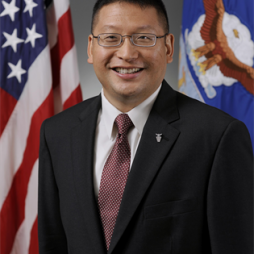
Peter Kim
Air Force | Deputy Director, Cyberspace Operations
Peter E. Kim, a member of the Senior Executive Service, is Deputy Director, Cyberspace Operations, Headquarters U.S. Air Force, Washington, D.C. He is responsible for the oversight and development of Air Force cyberspace strategies and implementation plans for Offensive Cyberspace Operations, Defensive Cyberspace Operations and DOD Information Network Operations. He ensures integrated and synchronized strategic employment of cyberspace strategies to retain freedom of maneuver in cyberspace, accomplish Air Force and joint force commanders’ objectives, deny freedom of action to adversaries, and enable Air Force mission assurance of operational activities relying on the cyberspace domain.

Daniel Gray
FBI | Supervisory Special Agent
Mr. Daniel Gray currently serves his country as a FBI Supervisory Special Agent (SSA) assigned to the Baltimore Field Office (as of April 2012) where he is responsible for the management and coordination of FBI Cyber Investigations for all of Maryland and Delaware. Prior to his present assignment he was the Assistant Section Chief of FBI Cyber Division’s Cyber National Security Section. He also performed a dual-role in this position as the Deputy Director of the presidentially-mandated National Cyber Investigative Joint Task Force (NCIJTF) for which the FBI is the executive agent. Mr. Gray is a career counterintelligence specialist having served a majority of his FBI career with FBI Counterintelligence Division.
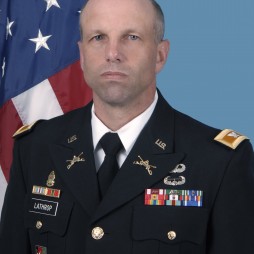
Colonel Scott D. Lathrop
US Cyber Command | Deputy Director, Advanced Capabilities and Technology Directorate
Colonel Scott D. Lathrop is a former Armor/Cavalry officer and currently an Information Systems Management Officer (Functional Area 53) in the United States Army. He is currently assigned as the Deputy Director, Advanced Capabilities and Technology Directorate, United States Cyber Command Fort Meade, Maryland. Colonel Lathrop is a distinguished graduate from the United States Military Academy (USMA) and holds a Ph.D. in Computer Science and Engineering from the University of Michigan.

Joe Silva
Symantec | Senior Manager, Intelligence Collections
Joe is the Sr Manager for Intelligence Collections on Symantec’s DeepSight team. In this role, he leads a team responsible for the targeted collection, processing, and exploitation of cyber threat intelligence information focused on malware and the actors responsible for its development and deployment. Prior to joining Symantec, Joe was the Director of Intelligence Management at iSIGHT Partners. During that period he was responsible for a research department conducting cyber threat intelligence collection operations on five different continents. Joe’s prior experience includes building and leading a high-profile U.S. DoD organization focused on the collection of cyber security information.
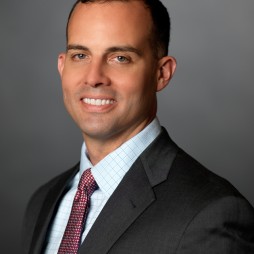
Hank Brown
CAI | Managing Director, Washington DC
Hank Brown is the Managing Director of the Washington D.C. office of CAI. He is responsible for leading the implementation of Information Technology services/ solutions and the Cyber Services practice for CAI in both the Commercial & Federal markets. Hank brings a depth of experience to CAI from 20 years of world-wide service in the Marines. As a Division Chief at U. S. Cyber Command, he designed and implemented process improvements for offensive operations in cyberspace, leading the team that authored the first Standard Operating Procedure for planning and conducting military fire support in and through that domain – he taught the process at Combatant Commands around the globe.

Chris Morgan
IKANOW | President
Chris is currently the President and Co-Founder of Ikanow. Ikanow is an open source, big data software organization that built it’s flagship product, Infinit.e, from the ground up, utilizing technologies such as MongoDB, elasticsearch, Hadoop, and others. He has 11 years of experience in project management, systems engineering design, software engineering design and development. In addition, he has extensive experience in operationalizing technology solutions into products that are both robust and practical.

Chris Nims
AOL | Senior Director of Information Technology Security
Chris is a strategic and proactive Information Security executive, with 18+ years of experience in balancing business needs of Fortune 500 companies and startups with risks and costs of controls. As the Head of AOL IT Security Chris plans, develops, and implements the enterprise information security vision and strategy for AOL and its Brands (e.g. The Huffington Post, MapQuest, TechCrunch, Engadget, AOL.com).

Ed Lowery
U.S. Secret Service | Special Agent in Charge - Criminal Investigative Division
Edward Lowery has served in a variety of protective and investigative assignments throughout his career in the United States Secret Service. Mr. Lowery was appointed to the Senior Executive Service (SES) in 2012 and continues in his current assignment as the Special Agent in Charge of the Criminal Investigative Division. Mr. Lowery began his career with the Secret Service in 1992 as a special agent in the New York Field Office, where he conducted numerous investigative and protective assignments. Mr. Lowery then transferred to Washington, D.C. and served on the Vice Presidential Protective Division for Vice Presidents Albert Gore and Richard Cheney.
Christopher Featherston
DHS | Senior Advisor
Christopher Featherston is currently on a detail assignment with DHS S&T Homeland Advance Research Projects Agency as a Senior Advisor and is supporting the Big Data Environment (BDE) Program. He currently is the Program Lead on the Multi-Level Security piece of the BDE program that will demonstrate the ability to protect sensitive interagency investigative information from disclosure. He supports the Interagency Office with over 27 years of security, intelligence, analytic program experience. As the former Deputy Director of the Special Projects Office and as the Branch Chief of Emerging Technology Threats he has a programmatic and technical expertise that is essential in technologies that are sensitive, classified, or deserving of extraordinary security protection.

Jon DiMaggio
IntelThreat | Director of Cyber Intelligence
Jon DiMaggio is a cyber security researcher and Director of Cyber Intelligence at IntelThreat with over 12 years of experience. He possesses advanced expertise in analyzing Advanced Persistent Threats (APTs). He specializes in identifying and tracking threat actors/groups and hacktivist operations against targeted organizations. He is a recognized leader in the cyber industry through DoD speaking engagements such as the DoD Collaborative Information Sharing Environment (DCISE) Tech Exchange and has presented at the US Senate Cyber Intelligence Working Group. He has extensive experience analyzing threat groups to gain intelligence on adversary’s motives and attribution to help prevent future attacks. Jon is a subject matter expert (SME) in tracking cyber threats using open source intelligence (OSINT) techniques to identify new tactics, techniques, and procedures (TTPs), infrastructure, and personas used by cyber threat actors.

Lisa Donnan
TASC | VP, Marketing and Technology
Lisa Donnan is a recognized thought leader in cyber security and social media analytics. She has built a reputation around successfully commercializing innovative technology and launching new businesses, markets and products in the public and private sectors. Lisa leads the Office of Marketing and Technology at TASC, where she is responsible for growth initiatives that capitalize on emerging technologies.

More Background On OpenAnalyticsSummit.com
OpenAnalyticsSummit.com was the official website for a series of specialized industry events known as the Open Analytics Summits, which took place primarily between 2013 and 2014. These summits were designed to bring together professionals working at the intersection of open-source technologies, big data, and advanced analytics. Although the site is no longer active in a modern sense, it persists through web archives and remains an important digital artifact from a pivotal era in data science’s rapid evolution.
The website functioned as both a central information hub and a promotional tool. It offered details on event schedules, speaker lineups, venues, and thematic tracks while also reflecting the broader mission of building a collaborative, interdisciplinary analytics community. Today, OpenAnalyticsSummit.com serves as a snapshot of how early big data practitioners organized knowledge-sharing before the explosion of large-scale global conferences like Strata, AWS re:Invent, or Google Cloud Next.
Historical Context and Timing
To understand the importance of OpenAnalyticsSummit.com, it’s essential to place it within the broader technological landscape of the early 2010s. This was a period when terms like “big data,” “data science,” and “machine learning” were transitioning from academic or niche industry jargon into mainstream business vocabulary.
Technologies such as Hadoop, MongoDB, Elasticsearch, and early NoSQL databases were gaining traction. Open-source frameworks were becoming central to enterprise analytics strategies, and organizations across government, healthcare, finance, and marketing were beginning to recognize the competitive advantage of data-driven decision-making.
The Open Analytics Summits emerged during this inflection point. Unlike massive corporate conferences, these events were more intimate, targeted, and practitioner-focused. They catered to professionals actively building analytics systems rather than simply consuming high-level thought leadership.
Locations and Venues
The summits took place in several major U.S. cities, each chosen for its strategic relevance to technology, government, or business ecosystems:
- Washington, D.C. / Arlington, Virginia – A hub for government agencies, defense contractors, and policy-driven data initiatives
- New York City – A center for finance, media, and marketing analytics
- Chicago – A growing Midwest analytics and enterprise technology hub
Venues included corporate headquarters and conference centers that reflected the professional, high-level nature of the events. For example, some summits were hosted at major corporate offices, including AOL’s headquarters, as well as high-end conference spaces with advanced audiovisual capabilities and networking environments.
These locations were not random—they were deliberately chosen to attract regional clusters of data professionals and decision-makers.
Structure and Format of the Summits
The Open Analytics Summits were typically structured as full-day events, emphasizing both education and networking. The format included:
- Keynote presentations addressing major industry questions, such as the role of open source in big data
- Multiple concurrent tracks, allowing attendees to tailor their experience
- Technical sessions focused on real-world applications
- Panel discussions featuring industry and government leaders
- Networking sessions, including informal breaks and structured opportunities
Topics ranged widely but consistently centered on practical implementation. Sessions explored:
- Social media analytics frameworks
- NoSQL database applications
- Predictive modeling and machine learning
- Government data transparency and open data initiatives
- Graph analysis and network intelligence
- Infrastructure for large-scale analytics
This balance of technical depth and strategic insight made the summits particularly valuable for mid- to senior-level professionals.
Speakers and Industry Representation
One of the defining features of the Open Analytics Summits was the caliber and diversity of its speakers. The events brought together voices from:
- Government agencies
- Academic institutions
- Private sector technology companies
- Startups and emerging ventures
Speakers included data scientists, CTOs, engineers, and policy experts. Many were deeply involved in building or advancing the technologies that defined the big data era.
Notably, the presence of government officials and defense-related experts distinguished these summits from purely commercial tech conferences. This blend highlighted the increasing importance of analytics in national security, intelligence, and public policy.
Additionally, contributors from companies working on open-source tools and platforms provided practical demonstrations and case studies, helping attendees translate theory into implementation.
Target Audience
The Open Analytics Summits were explicitly designed for a highly technical and professional audience. Attendees typically included:
- Data scientists and analysts
- Software engineers and developers
- CTOs, CIOs, and technical executives
- Product and program managers
- Researchers and academics
- Marketing and business intelligence leaders
This diversity created a multidisciplinary environment where technical practitioners could interact with strategic decision-makers.
Importantly, the events were not beginner-oriented. They assumed a baseline understanding of analytics concepts and focused on advancing knowledge rather than introducing fundamentals.
Themes and Core Mission
At its heart, OpenAnalyticsSummit.com reflected a set of core ideas that were shaping the analytics industry at the time:
1. Open Source as a Foundation
The summits strongly emphasized the role of open-source technologies in enabling scalable analytics. This included tools for data storage, processing, and visualization.
2. Collaboration Across Disciplines
By bringing together professionals from different sectors, the events encouraged cross-pollination of ideas between government, academia, and industry.
3. Practical Application
Rather than focusing solely on theory, sessions highlighted real-world implementations and lessons learned.
4. Accessibility of Data
Discussions often touched on open data initiatives and the societal value of making data more accessible.
Popularity and Industry Impact
While the Open Analytics Summits were not massive in scale, they were highly targeted and influential within their niche. Attendance numbers—typically ranging from around 90 to 200 participants per event—suggest a curated, high-quality audience rather than mass participation.
This smaller scale likely enhanced the value of networking and allowed for deeper engagement among attendees. Participants often included senior professionals, making the events valuable for both knowledge exchange and business development.
The summits contributed to:
- Early adoption of open-source analytics tools
- Increased collaboration between public and private sectors
- Greater awareness of big data applications across industries
Reviews and Attendee Experience
Feedback from attendees, as preserved through archival sources and online commentary, highlights several recurring themes:
- High intellectual value – Attendees appreciated the depth of discussion and expertise
- Diverse perspectives – Conversations often extended beyond analytics into philosophy, science, and broader societal questions
- Strong networking opportunities – The smaller format enabled meaningful connections
Some reflections emphasized how the event fostered unexpected interdisciplinary conversations, demonstrating the broader cultural and intellectual reach of analytics as a field.
Relationship to Broader Conference Ecosystem
OpenAnalyticsSummit.com existed within a growing ecosystem of data-focused events. Compared to larger conferences:
- It was more intimate and specialized
- It placed greater emphasis on open-source tools
- It featured stronger government and policy participation
In many ways, the summits can be seen as precursors or complements to larger conferences that later dominated the space.
Press and Media Coverage
While the Open Analytics Summits did not generate extensive mainstream media coverage, they were frequently referenced within:
- Industry blogs
- Professional networks
- Technology communities
This type of coverage is typical for highly technical conferences, where influence is measured more by practitioner engagement than by general public awareness.
Cultural and Social Significance
The significance of OpenAnalyticsSummit.com extends beyond the events themselves. It represents a moment when:
- Data science was becoming a recognized profession
- Open-source software was gaining legitimacy in enterprise environments
- Collaboration across sectors was accelerating innovation
The summits helped normalize the idea that data-driven insights could—and should—be shared across organizational boundaries.
They also reflected a broader cultural shift toward transparency, experimentation, and community-driven development.
Decline and Legacy
After 2014, the Open Analytics Summits appear to have ceased regular operation. Several factors likely contributed:
- Rapid expansion of larger, well-funded conferences
- Consolidation of industry events
- Shifts in how professionals consume knowledge (e.g., online platforms, webinars)
Despite this, the legacy of the summits persists. Many of the technologies and ideas discussed at these events—such as distributed computing, machine learning pipelines, and open data—have become foundational to modern analytics.
Website Structure and Content
OpenAnalyticsSummit.com itself was structured in a straightforward, functional manner typical of early 2010s event websites. Key sections included:
- Event listings and schedules
- Speaker profiles
- Venue information
- Registration details
- Descriptions of target audiences and themes
The design prioritized clarity and accessibility over visual complexity, reflecting the professional audience it served.
Notable Features and Insights
Several aspects of OpenAnalyticsSummit.com stand out:
- Early focus on NoSQL and big data frameworks, before they became mainstream
- Integration of cybersecurity and government analytics topics
- Strong emphasis on practical, real-world use cases
- Interdisciplinary speaker lineup, spanning technical and policy domains
These elements collectively positioned the summits as forward-thinking and highly relevant to their time.
OpenAnalyticsSummit.com represents a significant, if somewhat underrecognized, chapter in the history of data science and analytics communities. Through its associated events, it brought together a diverse group of professionals during a transformative period in technology.
The website now serves as an archival record of those efforts—a reminder of how far the field has come and how foundational ideas around open-source collaboration and data-driven innovation were shaped.
For modern practitioners, revisiting OpenAnalyticsSummit.com offers valuable perspective. It highlights the origins of many tools and practices that are now taken for granted, while also underscoring the importance of community-driven knowledge sharing in advancing technological progress.